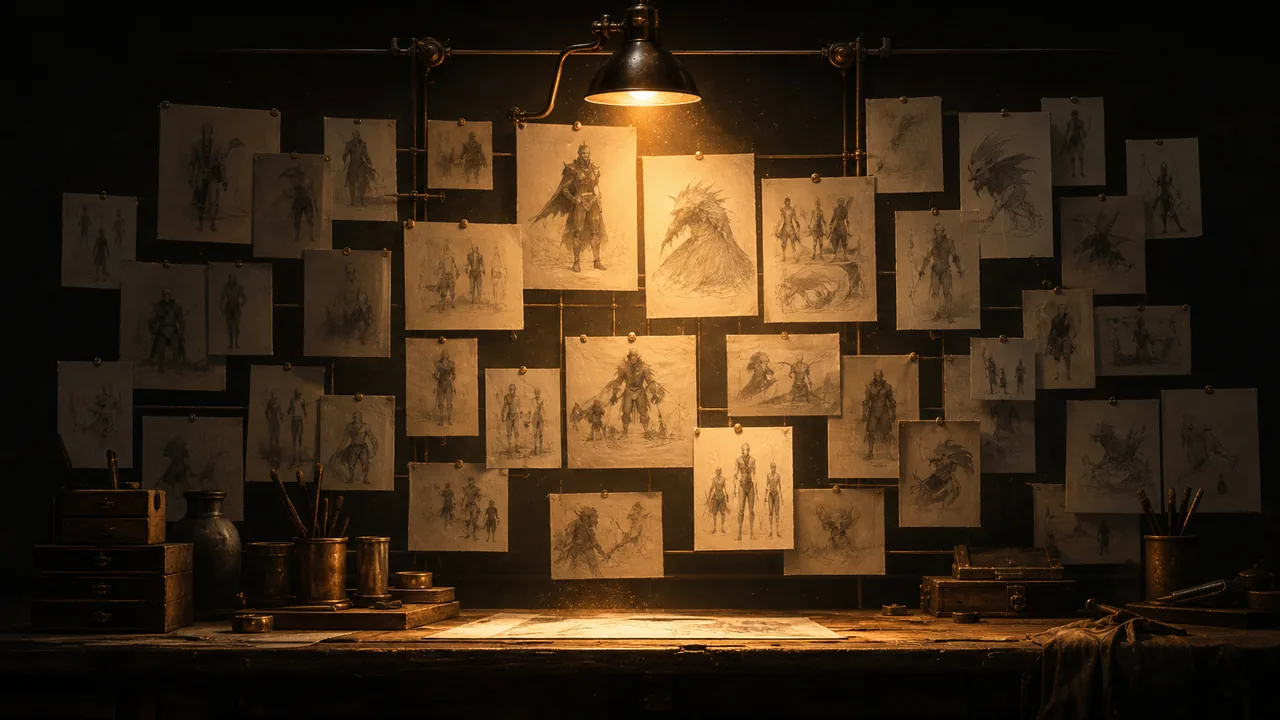
Three people, each raising an Agent partner as their own amplifier — and every partner shares one team memory. The moment one of us breaks a ceiling, that ceiling becomes everyone's starting line. Information gaps are gone at the root, and the humans are left with the thinking and the calls.Chess of the Hidden Gates is on Steam, localized in ten languages, releasing Q4 2026.
Three core members, each paired with a dedicated AI partner. Design, systems, publishing, art, economy, QA — the whole loop closes inside this trio. All three come from the same top-tier listed game company, full-time since August 2026. Three is the current size, not the end state — we scale the super-organization way, not by headcount.
A-Meng×Xiaomeng
DirectionOrchestrationDelivery
Not managing people — orchestrating how the whole organization runs and evolves itself.
Led AI enablement for a flagship title track at a top-tier listed game companyIndustry-first Agent-native super-organization, live since March 2026Built the multi-agent collaboration × self-evolving team-memory stackDesigned 'AI Junior Sister' — the first AI character in a 20-year IP · hundreds of millions of tokens a monthAuthored "Super Organization: Game Dev Org Forms in the AI Era"University of Toronto · Beijing Film Academy · ten years in Canada
Owns hereOrg orchestration & efficiency · Agent-native talent incubation · AI in the production pipeline · IP and worldbuilding
Xiaotian×Chinatsu
FoundationsBreakthroughsDelivery
The first playable comes from him. Almost every game starts on his prototype frame; everyone else builds up from that floor.
Led AI gameplay for a flagship title track at a top-tier listed game companyDesigner of the industry's first multi-agent LLM gameplay · 200M-registered title · 2024Industry-first DeepSeek-native deduction mode, 2025 · 2 humans vs 8 AI4 generations of Agent-native gameplay, solo-designed · 600K+ matches on peak dayOriginal design of an "AI stand-in" feature on a product with millions of DAUGames × music creator · 1M followers across platforms
Owns herePrototype frames & core systems · Gameplay design · Publishing and platform ops worldwide · Audio
Fangzhou×Xiaomao
FoundationsCross-transferBreakthroughs
Everything on screen is his. Modeling, VFX, rendering — all the way down to patching the engine source.
AI systems test engineer for a flagship title track at a top-tier listed game companyFull-stack art · modeling → VFX → rendering engine sourceEngine rebuilds in 8–11 seconds · 0.99 visual fidelity matchFirst-author EI paper · multi-scale hybrid TransformerMonte Carlo economy simulation · balance & crafting systemsMaster's in AI · medical imaging / object detection / style transfer
Owns hereFull-stack art (modeling / VFX / engine mods) · Automated QA pipeline · Economy and balance
What this way of working is called
An Agent-native super-organization
We've worked this way since March 2026. It is not "everyone uses AI" — it is five things meshing together:
01
Multi-human, multi-agent collaboration
Not everyone with their own chatbot. Each person has a primary AI partner; the partners talk to each other, delegate to each other, and cross-check — no human relay in the middle.
02
Shared team memory
One person's hard-won lesson is instantly queryable by the whole team and every partner. When someone else's agent gets smarter, yours does too — we aren't each raising our own AI, we're raising the same set of partners together.
03
Always-on agent infrastructure
Partners live in the background and pick up their own work. At 3 a.m., tests are running, assets are rendering, research is being digested, reports are being written.
04
People defined by six dimensions
No legacy job titles. Direction / Foundations / Breakthroughs / Cross-transfer / Orchestration / Delivery — where each person carries weight is explicit, so roles never collide and growth stays visible.
05
Humans discuss intent, not implementation
People own intent, trade-offs and taste; execution goes to the partners. Human hours are spent only on judgment — that's what removes the ceiling on output.
→
So the flywheel turns
Shared memory makes the partners feed each other; infrastructure means no one waits on a human; six dimensions keep roles clean. Every turn: thicker libraries, stronger partners, faster next game. The games we ship are samples of this org design.
A roguelike deck where every card is a move of Chinese chess. The knight cuts diagonals, the cannon fires over a screen, the pawn crosses the river and never looks back. Monsters strike squares, not health bars: step aside and the damage is zero; stand wrong and you're surrounded. That's positioning as defense.
Three acts, nine stars, nine bosses. Tianchong, Tianfu, Tianpeng, Tianqin, Tianren, Tianrui, Tianxin, Tianying, Tianzhu — each with its own score, its own art, and battle voice lines; the remnant soul of Chiyou has its own theme song. Sixteen stages to fight through; at the end, you face it. Self-developed, self-published, localized in 10 languages. Store page is live; releasing Q4 2026.
125
buildable cards
3
class archetypes
16
folklore stages
30+
creatures
9
full boss A/V sets
182
audio files
A Board You Can Hear
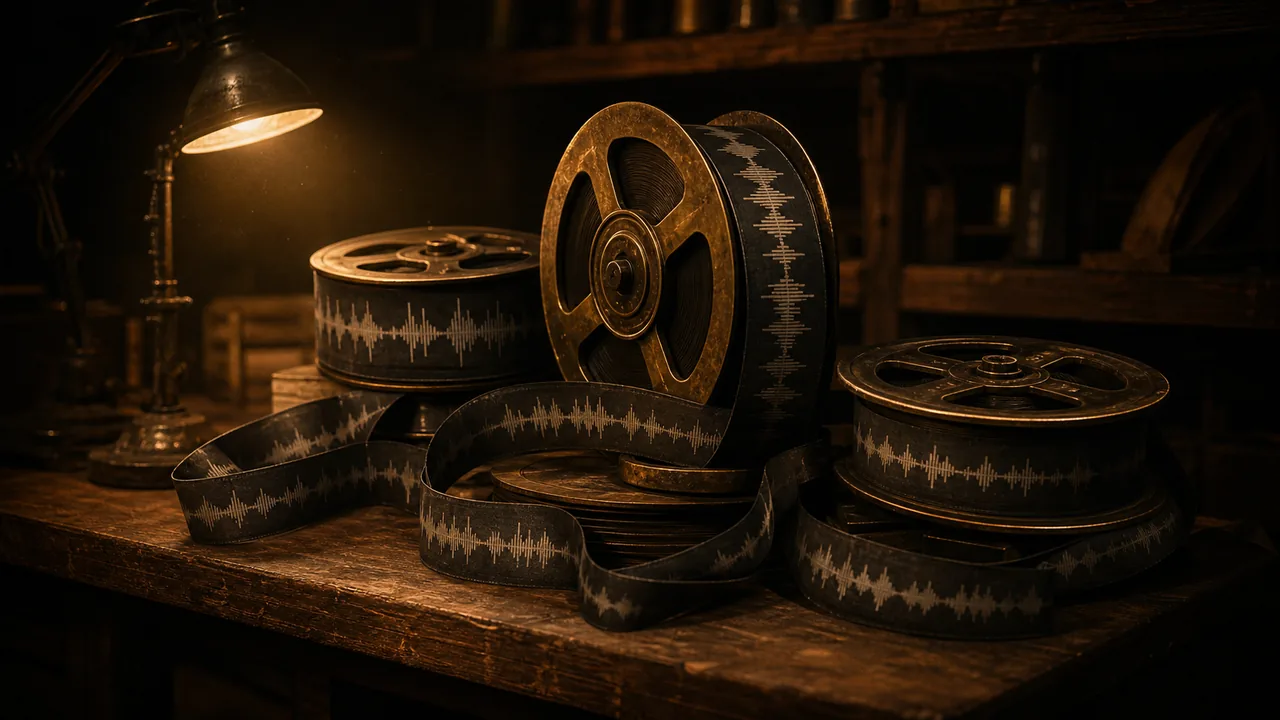
The sound of a cannonball follows its arc. Wind-up, muzzle, drop, impact — four segments recorded separately, eleven files composing a single shot. Thirty categories of action sound effects, each with three or more variants; the same move repeated three times never sounds the same.
Chinese chess moves had no established English terms. The team coined a set — H-leap for the knight's move, Relay for the cannon's screen jump. About 50,000 characters of original Chinese text, over 10,000 translated strings across ten languages.
Based on the July 2026 demo build; the final release will only have more.
Blades hit squares, not health barsThe knight cuts diagonals — one move, one killAcross the river, never back — step by stepStand wrong and you are surroundedEvery clear reshapes the deckEvery creature carries its own story
03IP incubation · In development
Four codenames, all on the road
Until a game is announced, it appears here as a codename only — titles, themes and footage are saved for the reveal. What we will say is how far each one has come.
CODENAME
PROJECT IMPRINT
Flagship IP · In full production
A multi-agent open world: the same orchestration system that runs our team every day, built directly into the gameplay. Everything each shipped game accumulates flows into this one.
Multi-agentOpen worldFlagship IP
CODENAME
PROJECT LOOP
AI narrative · Prototype playable
A narrative experiment with AI-driven NPCs. The core idea was validated with a 4-day prototype at an international game jam; the full version is in development, targeting Steam.
AI narrativeJam-proven
CODENAME
PROJECT ROULETTE
Fast rounds · Vertical slice done
Luck you can see and touch, rendered in real physics. The vertical slice is playable; polish is underway.
Physics feelFast rounds
CODENAME
PROJECT PUSHER
Cozy roguelike · Prototyping
A casual roguelike where hundreds of bodies stack, slide and collide under real physics. Mobile-first, Steam planned in parallel.
Cozy roguelikeReal physics
Names and footage are saved for the official reveals. Investors and publishers can request the full pipeline.
04The engine both lines share
What we're really building is a flywheel
Staff up, burn for three years, bet everything on one launch date — that's the industry's old play. We don't run it. The tools written for the last game and the publishing route it carved are ready on day one of the next. The more we ship, the faster the next one comes — that's the flywheel. The game is the deliverable; the pipeline is the asset.
Every tool it throws off flows back and spins it faster (illustrative)
What settles isn't just tools — it's design principles themselves.
Dozens of automated tasks tear down games and digest research every day, and the conclusions land straight in team memory. We work from first principles and write down the causal chain behind every call — why this design, why not that one. What we're really doing is raising AI partners into game-design experts stronger than ourselves.
Six libraries that only get thicker
— Teardown library
How others made it work, on file
Games, open-source repos, publishing and marketing plays — torn down daily into structured entries. Next decision of the same kind starts from the library, not from guessing.
— Memory library
Decisions, lessons, methods
Every team judgment lands with its causal chain, queryable by every AI partner. Before it, our AI routinely made things up on proprietary-knowledge questions; after, it answers or says it can't.
— Model & motion library
Characters, scenes, mocap
Models, rigs and captured motion enter one library and get reused across projects. The next game's characters don't start from a lump of clay.
— VFX library
What the pipeline produces
Assets from the automated VFX pipeline, catalogued by type. The next project pulls them off the shelf — no queueing behind a human.
— Audio library
Voices and sounds
Timbres, SFX and voice assets shared across games — no re-recording per title.
— Art library
Concepts and visual assets
Concept art, key art and UI assets archived with status flags — what's usable and what's retired, at a glance.
Four layers, nine pipelines
Layers are capability, pipelines are the production line, libraries are stock. Pipelines run on the layers, output settles into the libraries, and the next game pulls straight from there.
01 · Protocol layer
Swap the model, keep the workflow
Every agent plugs in through the same interface. Use one model today, a different one tomorrow — not a line of the workflow above it has to change.
02 · Always-on layer
Nobody has to watch it
Agents live in the background, each with its own task queue. Once work is queued you stop minding it — you go to sleep, it keeps going.
03 · Knowledge layer
Check the library, then act
Every conclusion settles into the library together with the causal chain behind it. Once connected, the AI stops inventing answers about our proprietary knowledge — and says so when it doesn't know. This memory system is open source.
04 · Engine layer
Source edit to rebuild: 8–11 seconds
Our own engine. From editing a line of source to a finished rebuild takes 8–11 seconds, so iteration never stalls on compile time.
Pipeline · Art assets
Concept art in, usable assets out
Three run in parallel: concept art to production-ready assets, design sheets to movable parts, concept art to rigged 3D creatures.
Pipeline · Worlds
One establishing shot, a whole area
An establishing concept painting mass-produces stylized 3D environments; a second track generates open-world terrain procedurally.
Pipeline · Animation & VFX
Describe it, get the effect
Animation retargeting and rigging toolchain, text description straight to VFX, cross-engine effect porting. Artists stop queueing behind each other.
Pipeline · Trailers & UI
Even the trailer is generated
Deterministic in-engine shot-by-shot capture — the same camera script yields the same cut every run; IP-styled icons end to end.
Nine pipelines, most of them running; the creature-asset pipeline is still being built.
One national invention patent pending.
When others finish a game, they have a game. When we finish one, we have a game plus six thicker libraries. And this system isn't only ours to use.
05Talent incubation · Training
Other programs hire studio veterans to teach. We were the ones training AI talent inside one.
Courses on the market teach tools, and tools turn over every six months. What we teach is how to work with agents: how to brief one, give it memory, review what it returns, and orchestrate several of them together — the exact process we run every day, moved into the classroom, then applied to your own creative work until you have a partner that actually understands your taste. All three instructors come from the same top-tier listed game company's AI group, where the day job was incubating Agent-native talent inside the group; the "one person plus their agents produces like a team" setup has been running since March 2026. Two tracks, one method, two different finish lines. Run in Shanghai, in Chinese.
Two tracks, one method
Super-individual track
Ages 12–18 · 30 per class · Saturdays
You direct your AI partners and ship a playable game with your name on it. You pick the subject, the partners do the work, and the direction and the bar for "done" are yours to set.
Finish
A launch showcase — parents watch, strangers play it
Take home
Your game + your personal six-dimension report
Super-organization track
18+ · 30 per class · teams of 3–4 · Sundays
The point isn't the tools — it's running an Agent-native organization end to end: splitting the work, staying aligned, pushing forward with humans and partners together. Teams of 3–4 take a project from kickoff to delivery. Some of the people you ship with become the people you found something with.
Finish
A demo day with industry reviewers in the room
Take home
Your MVP + your partner team + your six-dimension report
Both tracks run the same 16 weeks, the same four stages, the same six abilities and the same closing report. Nobody is cut, and no certificates are issued.
W1–W5W6–W13W14–W15W16
W1–W5
Generalist foundations
Games and art are required for everyone, alongside the one thread that runs the whole way through: turning an agent into a partner you can actually rely on.
W6–W13
Specialist tracks
Game track and art track run in parallel. The same method drops into each one's creative context, at real project tempo. You can still switch after choosing.
W14–W15
Joint sprint
Several mentors on the floor at once. Everything learned goes into getting the work to a releasable state.
W16
Showcase
Sixteen weeks of work meets a real audience. Not homework handed in — something people play and judge.
The difference isn't which tool you use. It's whether you taught it.
The same instruction gets one person a useless draft and another something they can ship. You keep the ideas and the calls that matter; everything else goes to the partner you trained. Build the smallest thing that runs, then scale it — one person into a finished game, one team into an MVP.
One person, one partner, same desk (illustrative)Week 16 — people play it on the spot (illustrative)
The six abilities, practiced for sixteen weeks
Direction
Deciding what to make and what to leave out, before touching the work.
Foundations
Building your own toolbox piece by piece, until it fits your hand.
Breakthroughs
Taking on problems nobody taught you, and finding the way through yourself.
Cross-transfer
Carrying what you learned somewhere else into where you are now.
Orchestration
Directing a team of agents so one person works like a group.
Delivery
Getting the thing you made into real people's hands.
All six are assessed weekly, and the closing six-dimension report cites the work and the process behind every judgment — it isn't a score.
No textbook — only projects currently in flight
There are no full-time teachers. The people teaching spend their days on the real thing: creative calls, technical problems, collaboration, shipping. Studio-grade method plus the potholes we hit this week, both in the room. What students touch is a product logic still developing, an engine whose source we patched, agent infrastructure running in production.
The finish line isn't a certificate. It's the thing you handed to someone.
06Talent incubation · Collaboration
You make the work, we build the IP
There is nothing left in this era that one person can't make. What's scarce isn't ability — it's attention. You only get so much of it in a day, and where it goes decides how far you get. So what we give you is two things: exactly the attention you don't have, and the knowledge assets we've been stacking up all along. You focus on the work and your name goes on it; the IP is held and run by the company — production, publishing, merchandise, sequels are ours to carry, not yours to worry about, and the upside is shared. That's what an agency looks like in the age of the super-individual.
Complementary attention
The part you're not good at — and shouldn't be spending time on — goes to the people and partners who are. Your attention stays on the calls only you can make.
Knowledge assets
Every pothole the team hit and every solution it found, organized into a system you can query. We use it every day.
Capacity
Reusable asset libraries, compute and tool licenses, plus AI partners living in the background — repetitive work and scheduling stop being your problem.
Publishing
Self-developed and self-published; Chess of the Hidden Gates ships in 10 languages, at home and abroad. When the work is done, this system takes it the rest of the way to players.
This is how we work with creators outside the team.
07Contact
Where business happens
Investors, publishers and platforms, creators who want to build with us, students who want in — come in here. Just say what you're after.